
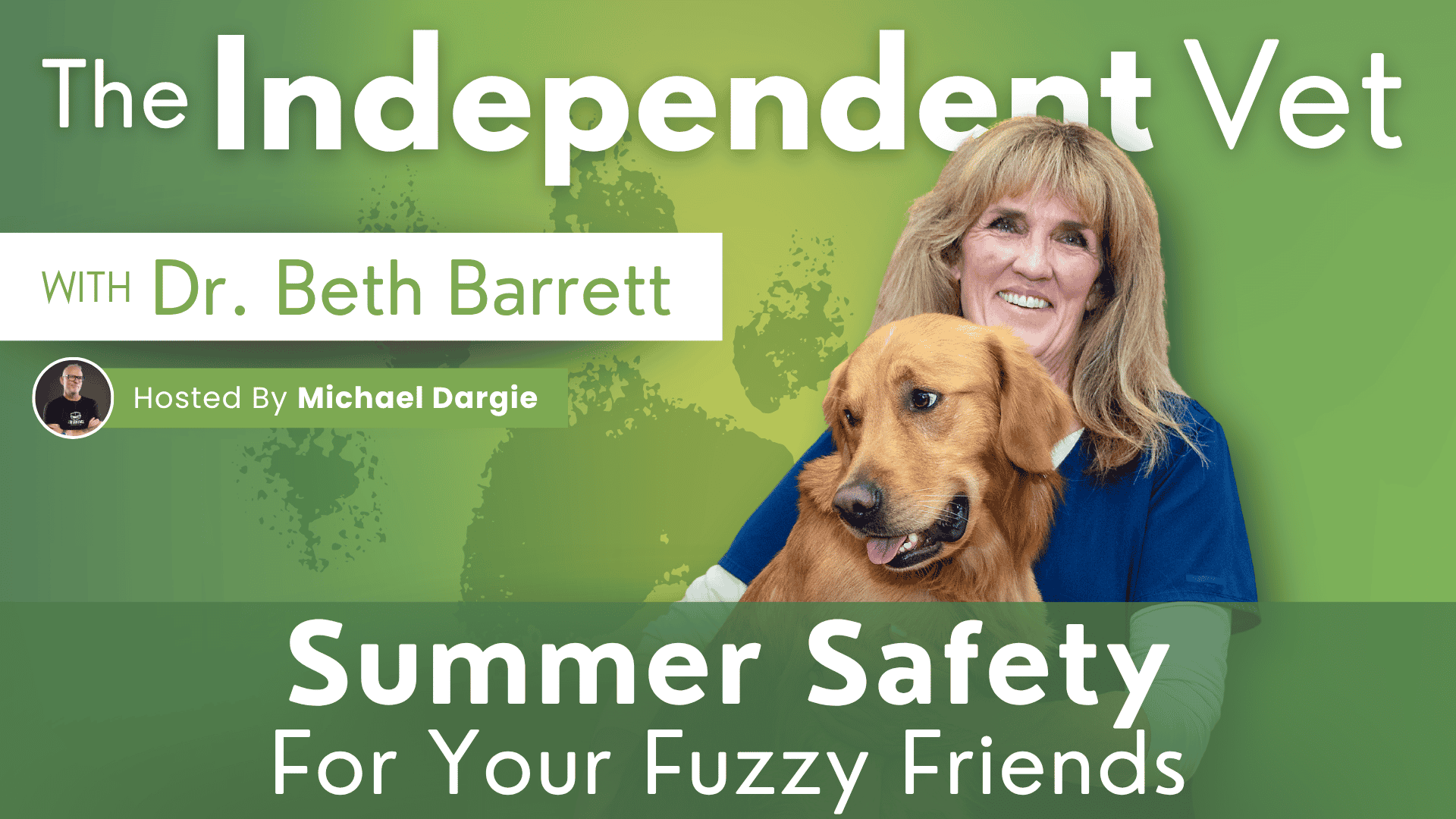
Episode 09 — Summer Safety For Your Fuzzy Friends
Season 1 · Episode 09 Run time: ~1 hour 2 minutes Host: Michael Dargie Featuring: Dr. Beth Barrett, DVM
Summer is one of the best seasons for making memories with your pets—but it can also be one of the most dangerous.
In this episode of The Independent Vet, Michael Dargie sits down with Dr. Beth Barrett to discuss the hidden hazards that arrive with warmer weather and how pet owners can keep their furry family members safe. From heat stroke and wildfire smoke to blue-green algae, ticks, foxtails, and fireworks, Dr. Beth shares practical advice every pet owner should know before heading outdoors.
You’ll learn how to recognize the warning signs of heat-related illness, which pets are most at risk, and what to do when a summer adventure takes an unexpected turn. Whether you’re planning hikes, lake trips, backyard barbecues, or simply enjoying longer days outside, this episode is packed with tips that could help prevent a veterinary emergency.
Because summer should be remembered for the fun—not for an urgent trip to the vet.
In This Episode
- Why heat-related illness can become life-threatening faster than most pet owners realize
- The signs and symptoms of heat exhaustion and heat stroke
- Which breeds and types of pets are most vulnerable during hot weather
- How wildfire smoke affects pets and when it’s safest to stay indoors
- The dangers of blue-green algae in lakes, ponds, and stagnant water
- What foxtails are and why veterinarians worry about them
- Tick prevention, tick removal, and emerging tick risks in Alberta
- Fireworks, thunderstorms, and helping anxious pets feel safe
- Summer hiking and travel tips for dogs and their humans
- When to seek veterinary care immediately
Episode Chapters
|
Time |
Segment |
|---|---|
|
00:00 |
Cold open & show intro |
|
00:45 |
Why summer can be dangerous for pets |
|
04:10 |
Heat exhaustion vs. heat stroke |
|
09:15 |
High-risk breeds and vulnerable pets |
|
13:40 |
Wildfire smoke and air quality concerns |
|
17:30 |
Water safety and blue-green algae |
|
22:05 |
Foxtails and hidden outdoor hazards |
|
25:50 |
Tick prevention and removal |
|
29:20 |
Fireworks, storms, and pet anxiety |
|
32:10 |
Myth or Muzzle? |
|
33:15 |
Ask Dr. Beth |
|
34:30 |
Outro |
Key Takeaways
Heat stroke is a true emergency.
Unlike humans, dogs and cats have limited ways to cool themselves. Once body temperature rises too high, organ damage can occur quickly. Early recognition and intervention are critical.
Not all pets handle heat equally.
Flat-faced breeds, overweight pets, senior animals, and highly active dogs are at significantly greater risk of heat-related illness and require extra caution during hot weather.
Water isn’t always safe.
Blue-green algae can produce toxins that cause severe illness or death in pets. If water looks suspicious, it’s safest to keep your dog out entirely.
Outdoor adventures come with hidden risks.
Foxtails, ticks, hot pavement, and dehydration are all common summer hazards that can turn a fun outing into a medical emergency.
Smoke affects pets too.
Wildfire smoke can irritate airways and worsen existing respiratory conditions. On poor air quality days, outdoor activity should be limited.
Prevention is always easier than treatment.
A little planning—bringing water, avoiding peak heat, checking for ticks, and creating a safe indoor space during fireworks—can prevent many summertime emergencies.
Myth or Muzzle?
MYTH: “If my dog wants to keep playing, they’re probably fine.”
Beth’s Take: Absolutely not. Dogs often push through discomfort because they’re excited, focused, or trying to keep up with their owners. By the time many dogs show obvious signs of heat distress, they’re already in trouble. It’s up to owners to recognize the risk and call for breaks before the dog does.
Ask Dr. Beth
Listener Question: “How hot is too hot to walk my dog?”
Short Answer: It depends on the dog, humidity, sunlight, and activity level—but a good rule is to avoid strenuous exercise during the hottest part of the day. Always test pavement with your hand, bring water, and watch closely for signs of overheating. Early morning and evening walks are often the safest choice during summer.
Resources & Mentions
- Barrett Veterinary Practice: https://barrettvet.ca
- Alberta Veterinary Medical Association (ABVMA): https://abvma.ca/
- Blue-Green Algae Information — Government of Alberta: https://www.albertahealthservices.ca/news/bga.aspx
- Tick Prevention & Parasite Control Resources: https://www.canada.ca/en/public-health/services/publications/diseases-conditions/lyme-pamphlet.html
- Wildfire Smoke Air Quality Updates: https://www.alberta.ca/wildfire-smoke-information
Summer Safety Checklist
Before heading out with your pet this summer:
✓ Fresh water available at all times
✓ Access to shade and cool resting areas
✓ Tick prevention up to date
✓ Avoid midday heat and hot pavement
✓ Watch for blue-green algae near water
✓ Check ears, paws, and fur after hikes
✓ Create a safe indoor space during fireworks
✓ Know the signs of heat stroke
Connect with The Independent Vet
Website: barrettvet.ca
Instagram: @barrettveterinarypractice
Email: drbarrettvet@gmail.com
Phone: 403.860.5763
Got a question for Dr. Beth? Send it in—it might be featured in a future Ask Dr. Beth segment.
Disclaimer
This podcast is for educational and informational purposes only. Always consult your veterinarian for medical advice specific to your pet.
About the Author: Roxane Wenstrom